
Stucco vs. EIFS: The Definitive Guide for Chicago Homeowners
To the untrained eye, traditional stucco and Exterior Insulation and Finish Systems can appear entirely identical. However, beneath their textured surfaces, they are two vastly different cladding systems with distinct structural properties, maintenance needs, and energy performance profiles.
As we move deeper into 2026, a major trend in exterior home remodeling is the shift toward durable, energy-efficient materials that can withstand unpredictable Midwestern weather. If you are considering an exterior facelift, an addition, or a complete cladding replacement, understanding the difference between hard coat stucco and synthetic EIFS is critical. Here is everything you need to know to make the right investment for your property.
What is Traditional Stucco?
Traditional stucco, often referred to as hard coat stucco or exterior plaster, is a time-tested building material with roots dating back to ancient Roman and Greek architecture. It is an extremely durable, cement-based mixture consisting of Portland cement, sand, lime, and water. For residential homes, this heavy mixture is typically applied in a three-coat system over a metal lath attached directly to the substrate. Because it is essentially concrete, traditional stucco is dense and highly impact-resistant, making it an incredibly resilient shield against the elements.
What is EIFS?
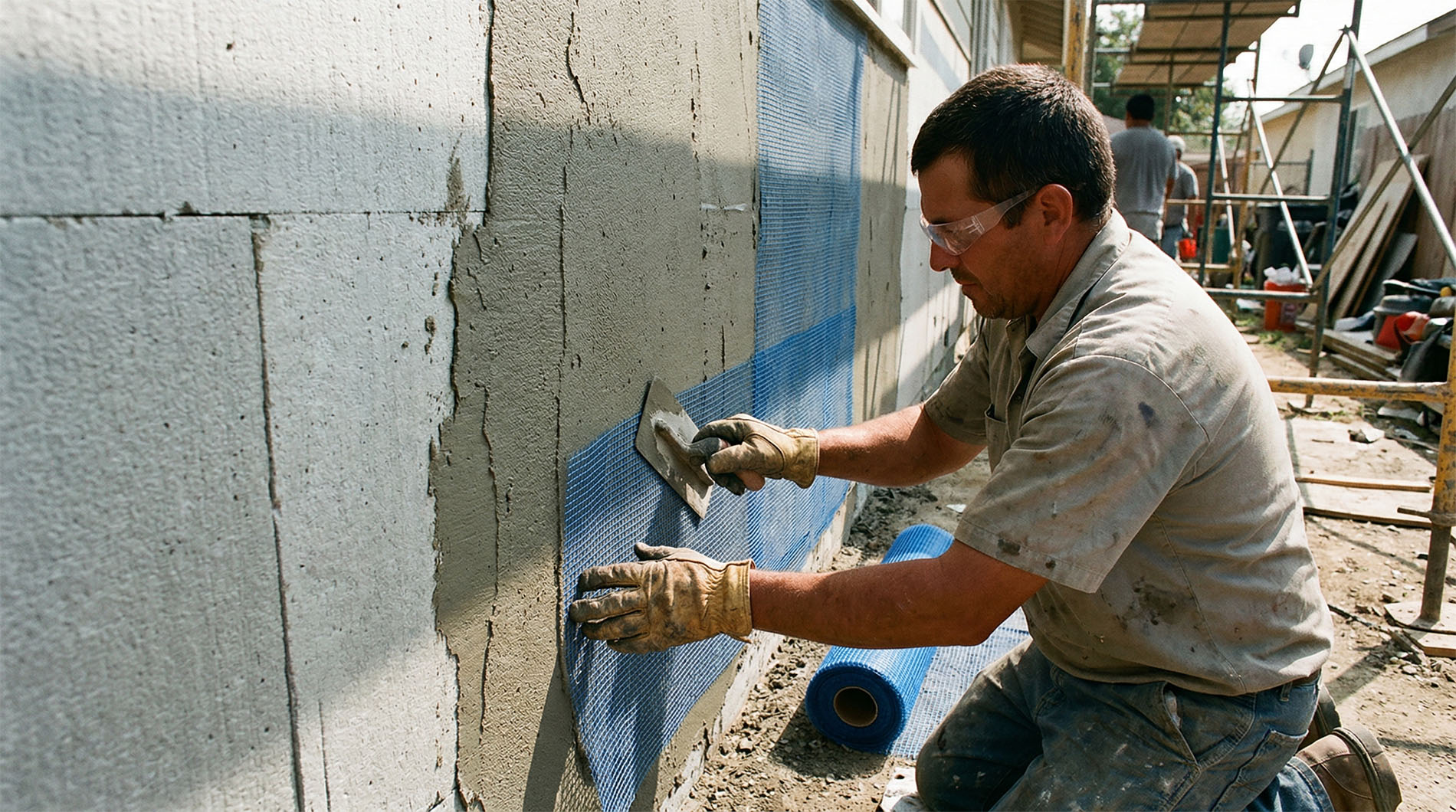
EIFS was originally developed in Europe shortly after World War II as a method to retrofit and insulate damaged masonry walls. By the late 1970s, it became widely popular in the U.S. as a high-performance alternative to traditional stucco. Unlike a simple cement mixture, EIFS is a multi-layered wall system. It consists of a rigid foam insulation board attached to the exterior sheathing, a base coat embedded with reinforcing fiberglass mesh, and a final acrylic-polymer finish coat.
The Showdown: Key Differences
Weight and Flexibility
Traditional three-coat stucco is exceptionally heavy, weighing between 10 to 12 pounds per square foot. If you walk up to a traditional stucco wall and knock on it, it will feel and sound like solid rock. EIFS, on the other hand, is roughly 80 percent lighter than traditional stucco. Knocking on an EIFS wall will typically produce a hollow sound due to the underlying foam insulation. Because of its lightweight and synthetic polymers, EIFS is far more malleable and resistant to cracking as a home shifts and settles over time.
Energy Efficiency
In 2026, minimizing energy consumption is a top priority for property owners. This is where EIFS dramatically outperforms traditional methods. Standard stucco offers virtually no thermal resistance, possessing an R-value of just 0.20. Conversely, the integrated insulation board in EIFS provides a continuous thermal barrier with an R-value between 4 and 5.6 per inch. This continuous layer eliminates thermal bridging through wood studs, potentially reducing air infiltration by up to 55 percent compared to standard construction.
Moisture Management
Traditional stucco is naturally porous, which means it allows moisture to evaporate and the wall to breathe. EIFS is non-porous and acts as a barrier. While early EIFS versions in the 1980s faced issues with trapped moisture, modern EIFS systems incorporate advanced drainage planes, channels, and weeps to move any intruding water safely out of the wall assembly.
Busting Common Myths
Myth: EIFS causes wood rot. Reality: This stems from outdated 1980s barrier systems. Today’s modern, code-compliant drainable EIFS has a moisture failure rate of less than 1 percent when installed by certified professionals.
Myth: Traditional stucco always cracks. Reality: While concrete naturally shrinks, severe cracking is not inevitable. Cracks are usually the result of missing expansion joints, improper lath installation, or inadequate curing time. Expert installation mitigates these risks.
Which is Right for Your Home?
If you are looking for pure, unmatched impact resistance and a traditional, breathable masonry feel, hard coat stucco remains a stellar choice. However, if your goal is to drastically lower your winter heating bills, prevent surface cracking, and enjoy a vibrant, fade-resistant acrylic finish, EIFS is the superior investment.
At Illinois Stucco Contractors, our certified specialists are experts in both traditional stucco restoration and modern EIFS installation. Call us today at (847) 809-1019 to schedule a consultation and discover the best cladding solution for your Chicagoland home!