
Tudor Stucco Repair: How to Fix Half-Timber Walls Without Losing Their Charm
Drive through Evanston, Winnetka, Kenilworth, or the older streets of Lake Zurich and you will see them: steep gables, tall chimneys, and dark boards set into light stucco. Tudor-style homes are some of the most loved houses on the North Shore. They also have one weak spot that most owners do not know about until it costs them money. This guide explains Tudor stucco repair: why the walls between the timbers crack, where water gets in, and how to fix the damage without losing the look that makes these homes special.
Why Tudor Stucco Repair Needs Special Care
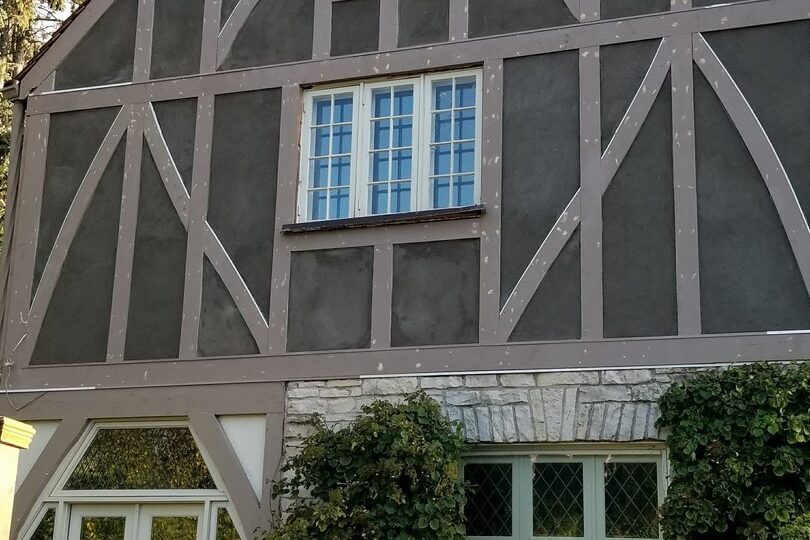
Most Tudor Revival homes in the Chicago area were built between about 1900 and 1940, with the peak in the 1920s. The dark “half-timbers” on these houses look like a structural frame, but on almost all of them the boards are decorative. They are nailed onto the wall, and stucco fills the panels between them.
That design puts two very different materials side by side. Wood swells when it is wet and shrinks when it dries. Stucco barely moves at all. After 80 or 100 Illinois winters, the joint where the two meet is often the first place a Tudor wall starts to fail.
Common Problems That Lead to Tudor Stucco Repair
When we inspect older Tudor homes, the same issues come up again and again:
- Gaps along the timbers. The wood has shrunk away from the stucco, leaving a thin open line on one or both sides of each board.
- Rot on the top edge of horizontal boards. Rain sits on the flat top of a board, soaks in, and rots it from above. You often cannot see this from the ground.
- Hairline and step cracks in the panels. These usually start at the corners of a panel, where the stucco meets two boards.
- Hollow or bulging stucco. Water behind the panel rusts the old metal lath or loosens the stucco from it. Tapping the wall gives a dull, hollow sound.
- Old patches that do not match. Earlier repairs done with hard, modern mortar stand out in color and texture and often crack around their edges.
- Peeling paint. Thick, plastic-type paints trap moisture in the wall. When that water tries to get out, the paint lifts off in sheets.
If you see any of these, the problem is usually bigger behind the surface than in front of it. Our page on stucco repair explains what we look for during a visit.
Where Water Gets Into a Half-Timber Wall
Almost every Tudor stucco problem comes back to water. The usual entry points are:
- The top edge of horizontal and diagonal timbers, where water runs along the board and into the joint.
- Window heads and sills, especially where a timber frames the window.
- The base of chimneys and the line where a roof meets a stucco gable.
- Cracks at panel corners that open a little more with each freeze-thaw cycle.
Once water is inside, it soaks the wood, rusts the lath, and freezes in winter. Each cycle pushes the stucco a little farther off the wall. That is why a crack that looked small one spring can turn into a loose panel two or three years later.
How We Handle Tudor Stucco Repair
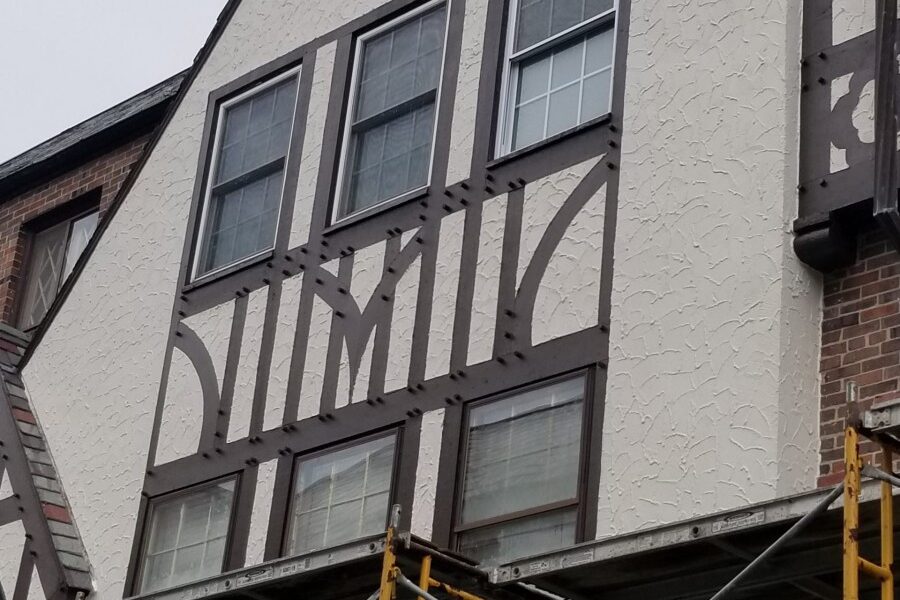
Good Tudor stucco repair is slow and careful. The goal is to fix what failed and keep as much original material as possible. Here is how we approach Tudor stucco repair on North Shore and Lake Zurich homes:
1. Inspect the Whole Wall First
We tap every panel to find hollow areas, probe the timbers for soft wood, and note old patches. On many homes, we take moisture readings around windows and below the worst joints. This tells us what must come out and what can stay.
2. Fix the Wood Before the Stucco
Rotted boards are cut out and replaced with rot-resistant wood milled to the same size and profile. Where a horizontal board has no protection on top, we add a small metal drip or flashing so rain runs off instead of into the wall. Skipping this step is the most common reason a Tudor stucco repair fails again.
3. Remove Only the Failed Stucco
Loose panels come out down to sound lath. We cut clean, square edges and leave solid stucco in place. Where the old lath is rusted through, we install new lath and fasten it to the wall.
4. Use a Mix That Suits an Old Wall
Many Tudor homes have stucco that is softer than modern mixes, often with lime in it. A very hard patch can crack the softer stucco around it. We pick a mix that matches the strength of your wall, then apply it in layers with time to cure between coats.
5. Match the Texture and Seal the Joints
Tudor stucco often has a hand-troweled or rough-cast texture. We make a test patch so you can see the match before we do the full wall. Then we seal the joints between wood and stucco with a flexible sealant over backer rod, so the wood can move without opening a crack.
Tudor Stucco Repair Mistakes to Avoid
- Caulking over everything. Sealant over a rotted board or a wet panel only hides the problem and traps the water.
- Using the hardest mortar you can buy. On an old wall, harder is not better. A mismatched mix is one of the main causes of new cracks around old patches.
- Painting with a non-breathable coating. Old stucco needs to dry out. Use mineral paint, limewash, or another breathable product made for masonry.
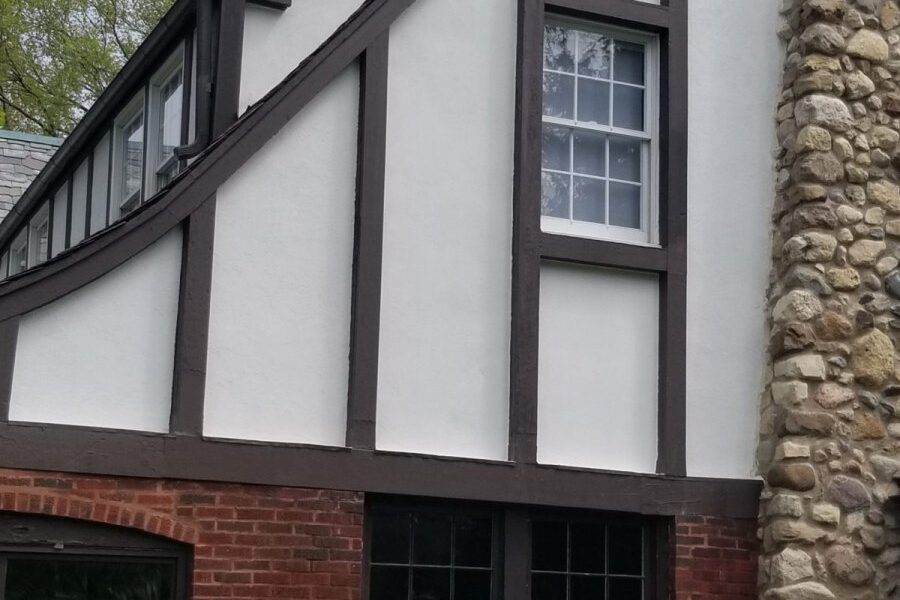
- Tearing off the whole wall by default. A full re-stucco is sometimes needed, but on many Tudor homes most of the original stucco is still sound and worth saving.
The National Park Service guide to repairing historic stucco covers these points in more depth and is a good read for any owner of an older home.
When to Call for Tudor Stucco Repair
The best time to check your walls and plan Tudor stucco repair is in spring, after the snow melts. Walk around the house and check the top edges of the timbers, the corners of each panel, and the area under windows. Call a pro if you find open gaps, soft wood, hollow-sounding stucco, or stains that keep coming back.
Repairs on old stucco need mild weather to cure, so we schedule most Tudor stucco repair in Lake Zurich and on the North Shore between late spring and early fall. Booking an inspection early in the year gives you the best choice of dates.
Keep the Character, Fix the Problem
Tudor stucco repair should not change the face of your home. It needs dry timbers, tight joints, and stucco that matches what is already there. If your half-timber walls are showing cracks, gaps, or peeling paint, see how we handle historic stucco restoration and crack repair and sealing, or request a free estimate. Illinois Stucco has worked on older homes in Lake Zurich and across the North Shore since 2002.